Founded in 1977, Community Action Stops Abuse (CASA) is the official certified domestic violence center serving Pinellas County, FL. Pinellas Community Foundation (PCF) began supporting that work in 1985—and nearly forty years, 69 grants, and one incredible partnership later, CASA operates Florida’s only Family Justice Center, with more than $1,345,143 in support awarded along the way.
A Foundation Built on Consistency
The relationship began with the basics: steady general operating support that let CASA keep its emergency shelter, crisis hotline, and case management programs running year after year. In 2019 alone, CASA admitted 654 people to its emergency shelter, 90% of them from Pinellas County. That kind of consistency happens when an organization can count on the same partner returning, budget cycle after budget cycle, rather than chasing a new funder every year.
And as CASA grew, so did its needs. An early capital grant helped modernize computer equipment used to track survivors seeking legal protection: the unglamorous infrastructure that makes advocacy possible behind the scenes.
Adapting Through a Pandemic
Then came 2020. When the pandemic made in-person and even phone-based outreach dangerous for survivors sheltering with their abusers, CASA had to reinvent how it reached people in crisis. Support from the Pinellas CARES Nonprofit Partnership Fund helped CASA stand up text-based crisis hotline software and video licensing for support groups, quiet infrastructure that let survivors reach out safely when a phone call could have gotten them hurt.
A Milestone Nearly Forty Years in the Making
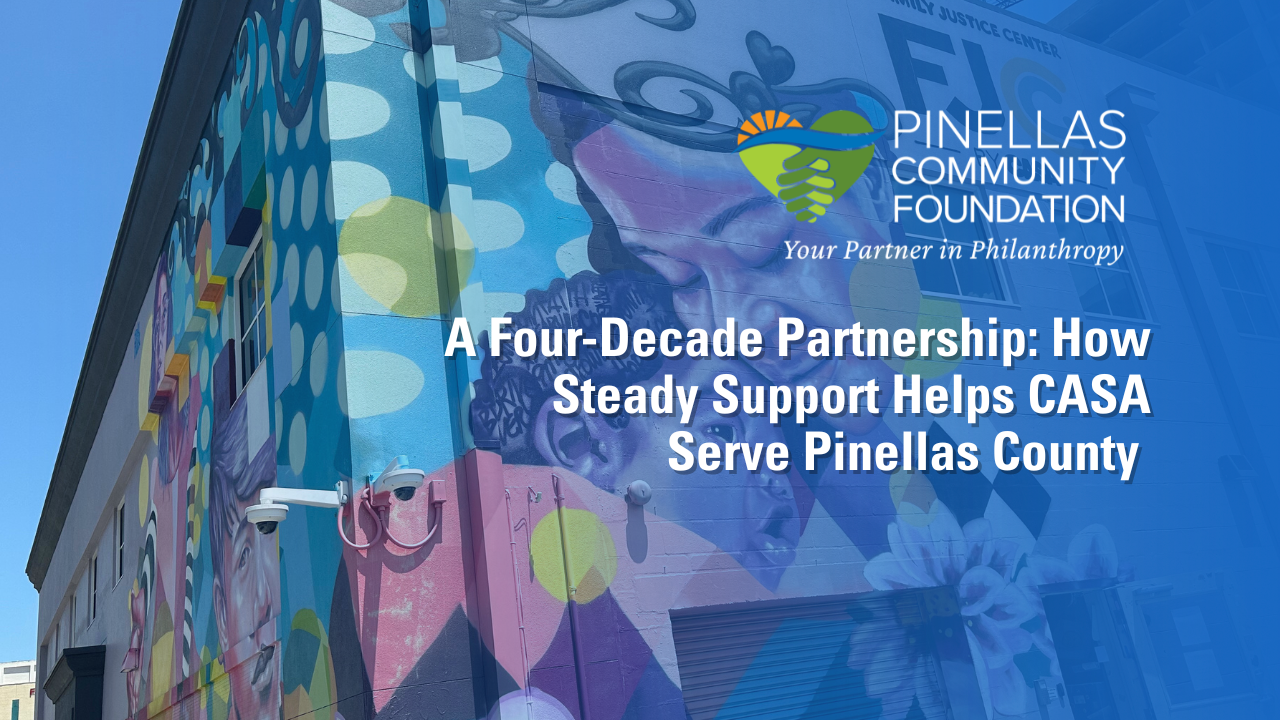
In October 2022, that steady foundation helped CASA reach a milestone: the organization opened Florida’s only Family Justice Center, bringing shelter referrals, legal advocacy, and support services together under one roof so survivors don’t have to retell their story at office after office. The center outgrew expectations almost immediately. By mid-2023, it was averaging 47 people served per week, well above the 25 to 35 originally projected, with a growing share coming from north Pinellas County.
Expanding North to Clearwater
That growth meant CASA needed to expand its reach north. Federal recovery funds* helped renovate a newly acquired Clearwater property into office space for a housing advocate and an attorney dedicated to north county residents. The funding also supported a bilingual advocate position to meet rising demand, with other funding expected to sustain the role going forward.
Modernizing From the Inside Out
Growth on the front lines put pressure on everything behind the scenes, too. Two canceled fundraising galas and weeks of thrift-store closures during the pandemic had already strained CASA’s unrestricted revenue, leaving aging laptops and an under-secured administrative building increasingly out of step with the organization’s growth. Federal recovery funds* addressed that gap directly: 40 replacement laptops kept case managers, funder-reporting staff, and remote support groups running, and a new swipe-card entry system helped protect a building where, in the past, individuals seeking to harm survivors had tried to follow them onto CASA property.
What Partnership Looks Like
None of these projects—hotline software, laptops, a door lock—makes headlines on its own. But together, across four decades, these small things add up to form a real community partnership: one that funded shelter beds, helped CASA weather a pandemic, backed the opening of Florida’s only Family Justice Center, followed the organization north into Clearwater, and modernized the systems holding it all together.
That partnership hasn’t stopped. CASA remains a current PCF grant partner today, and the relationship continues to grow alongside the organization’s work serving survivors across Pinellas County.
Inspired by what is possible in Pinellas County? Learn how to establish a fund at Pinellas Community Foundation and put your giving to work: pinellascf.org.
—
* Federal recovery funds refers to the City of Clearwater ARPA – Emergency Housing & Social Services grant and the ARPA Nonprofit Capital Project Fund.