Charitable Planning Guide for Advisors

Many high-net-worth clients want philanthropy built into their financial plans, and they look to their advisors to guide those decisions. This guide gives you a practical framework for when to raise charitable planning, which strategy fits, and how to move from conversation to action.

It’s written for financial advisors, CPAs, and estate attorneys who want to add charitable planning to client work without adding complexity. Use it before, during, or after client meetings.
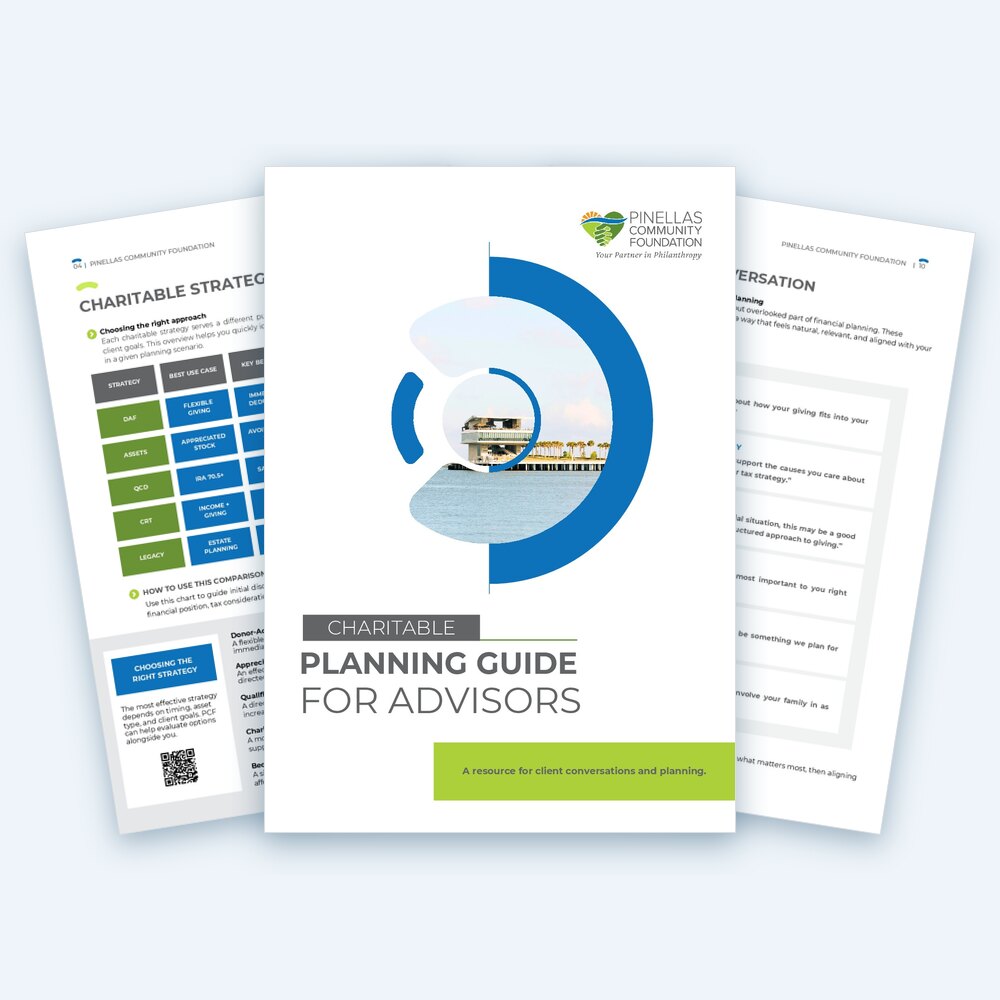
Cover and two inside pages of the Charitable Planning Guide for Advisors

What’s Inside the Guide

The guide is built for real client conversations. Inside you’ll find:

  • When to introduce charitable planning: five financial moments where giving can improve tax outcomes, including a business sale, appreciated assets, year-end planning, estate updates, and RMDs

  • Charitable strategies at a glance: a side-by-side look at DAFs, appreciated asset gifts, QCDs, CRTs, and legacy gifts by use case, key benefit, tax advantage, and complexity

  • Donor-advised funds in practice: how DAFs work and five common planning applications

  • Private foundation comparison: costs, payout rules, and administrative requirements compared with a PCF fund

  • Conversation starters: six prompts for raising giving naturally with clients

  • Three client scenarios: a business sale, appreciated assets, and estate and legacy planning

  • How PCF fits into your workflow: a simple path from identifying the opportunity to implementation

Who Is This Guide For?

The guide is designed for professionals who advise clients on wealth, taxes, or estates, including:

  • Financial advisors and wealth managers

  • CPAs and tax professionals

  • Estate planning attorneys

  • Trust officers and family office professionals

It’s especially useful when a client is facing a liquidity event, holds highly appreciated assets, is reviewing an estate plan, or wants a more structured approach to giving.

Why Financial Advisors Work with Community Foundations When Establishing CRTs

Why Advisors Use This Guide

Identify opportunities

Recognize the financial moments where charitable planning improves tax outcomes and long-term strategy.

Introduce strategies clearly

Present giving options in a structured way clients can follow.

Compare options

Evaluate charitable vehicles side by side to find the best fit for each client.

Move to action

A clear path to engage PCF and put the strategy in place.

How PCF Fits Into Your Workflow

PCF works as an extension of your advisory team. You stay at the center of the client relationship.

#1:

Identify the opportunity

Recognize when charitable planning can strengthen your client’s financial strategy.

#2:

Introduce the concept

Frame giving as part of a broader planning conversation.

#3:

Connect with PCF

Bring us in to support strategy, structure, and next steps.

#4:

We handle the details

We manage fund setup, administration, and ongoing support, and keep you informed at every stage.

Common Misconceptions About Working With a Community Foundation

Common Misconceptions About Working With a Community Foundation

“I’ll lose the client relationship.” You remain the primary advisor. PCF supports the strategy and handles administration, and you choose your level of involvement.

“Charitable planning is only for the ultra-wealthy.” A donor-advised fund at PCF can be opened with $5,000.

“A private foundation gives my client more control.” For many clients, a fund at PCF offers similar benefits with no excise tax, no required annual payout, and far less administration.

“It’s too late if the transaction is already underway.” Planning works best before a sale, but PCF can still explore immediate options with you.

Get Your Free Copy

Enter your information below and we’ll email you the Charitable Planning Guide for Advisors.
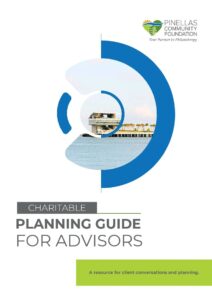
Cover of the Charitable Planning Guide for Advisors from Pinellas Community Foundation
Meg Lokey

Prefer to Talk It Through?

Meg Lokey, Vice President of Philanthropy, works directly with advisors on client strategy.
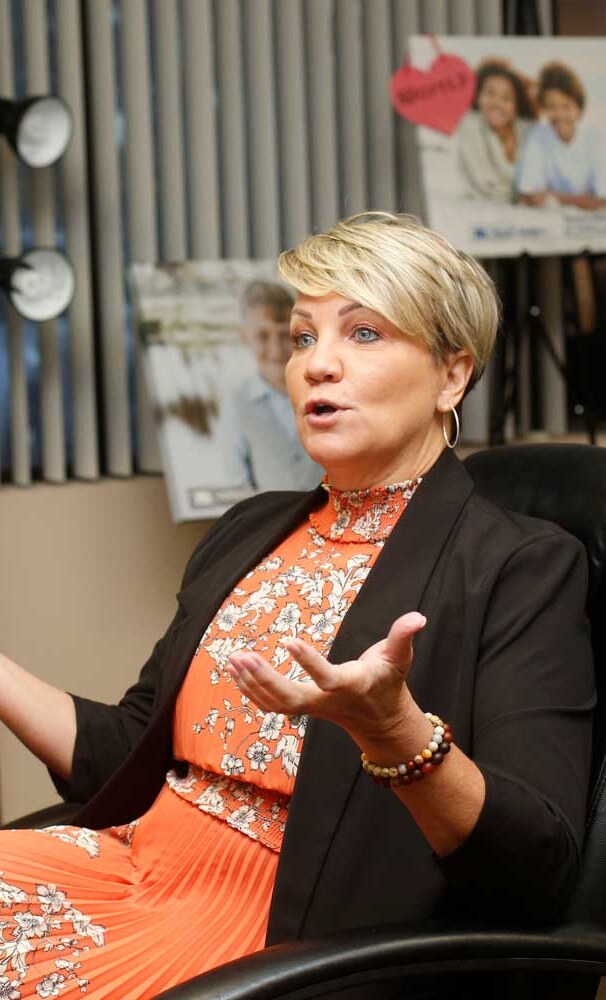
A Pinellas Community Foundation team member talks with an advisor

Frequently Asked Questions

Yes. Enter your name and email and the PDF is sent to your inbox right away. You can upload it to your AI tool of choice. When you do, follow your firm’s AI, confidentiality, and privacy policies.

Financial advisors, CPAs, estate attorneys, and other professionals who help clients make decisions about wealth, taxes, and legacy.

Donor-advised funds, gifts of appreciated assets, qualified charitable distributions, charitable remainder trusts, bequests and legacy gifts, plus endowment, planned legacy, field of interest, and simplified private foundation funds.

The guide is written for advisors, but many of the conversation starters and scenarios are designed to be used directly in client meetings.

Yes. The guide can be saved or uploaded to your preferred AI or knowledge platform for quick reference when preparing for client conversations, reviewing charitable planning options, or exploring questions to discuss with a client.

Before doing so, follow your firm’s policies regarding AI use, confidentiality, privacy, and client information. Avoid uploading sensitive or personally identifiable client information unless your organization’s policies and approved tools specifically allow it.

The guide is intended as an educational resource and does not replace tax, legal, or financial advice.

You stay the primary advisor. PCF supports the charitable strategy, handles fund setup and administration, and keeps you informed at every step.

Most clients start with a donor-advised fund, which can be opened with $5,000. Book time with Meg or refer a client to talk through options.