Through the American Rescue Plan Act (ARPA) Nonprofit Capital Project Fund administered by Pinellas Community Foundation, eligible nonprofit organizations across Pinellas County received funding to strengthen their capacity and expand services. While the program has now concluded, its impact continues to be felt through projects like this one from Gulf Coast Dental Outreach.
For 14 years, Gulf Coast Dental Outreach (GCDO) has been quietly transforming lives across Pinellas, Pasco, and Hillsborough counties, one appointment at a time. Founded by Dr. Robert Ettleman, the clinic serves uninsured and underinsured adults living at or below 150% of the federal poverty level, offering everything from routine cleanings and X-rays to fillings, extractions, and full restorative work like dentures and crowns.
Operating out of donated space at the Tarpon Springs Health Department, GCDO fills a critical gap in the healthcare system. Without access to affordable dental care, patients often endure pain until it becomes an emergency, ending up in hospital ERs that can treat the symptom but not the underlying problem. GCDO exists to break that cycle, offering real treatment, not just temporary relief.
Like so many small nonprofits, GCDO faced enormous strain during the pandemic. Volunteer dentists shut their own practices, funding tightened, and yet the need for care only grew. The clinic kept its staff on payroll throughout the shutdown and has since worked to expand patient capacity, even as rising costs made it harder to retain qualified dental assistants.
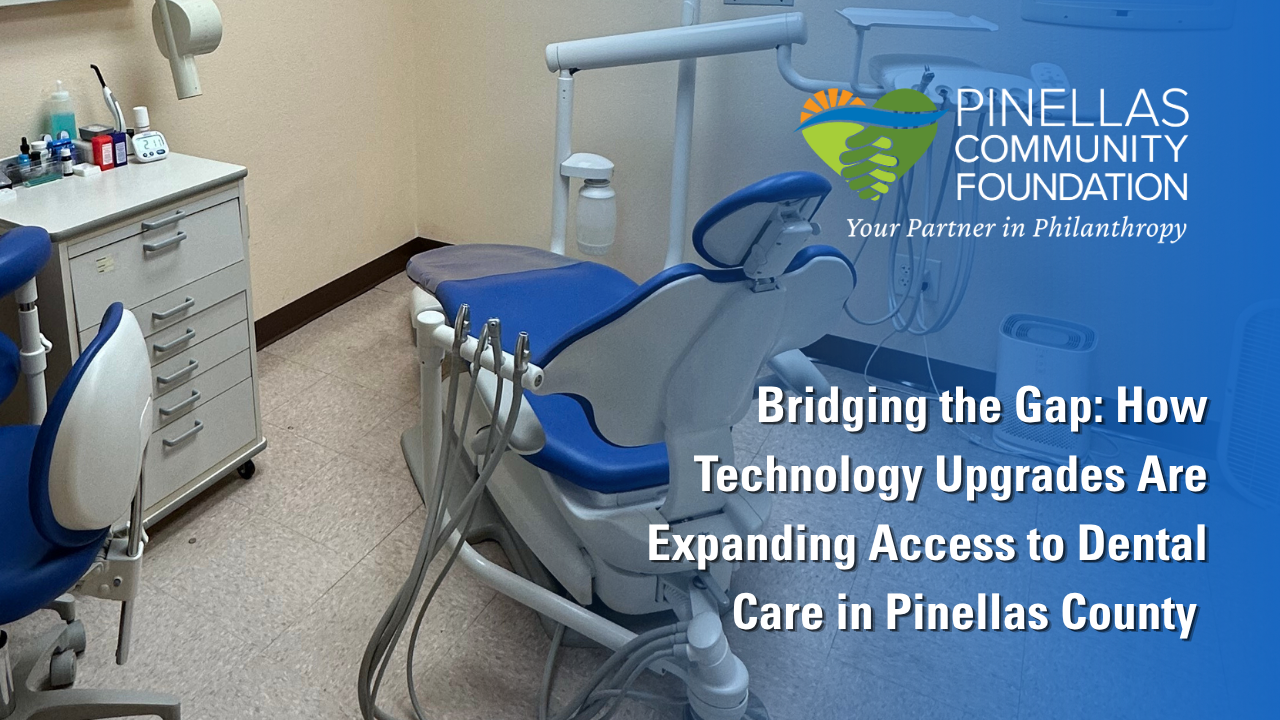
Through ARPA funding administered by Pinellas Community Foundation, GCDO was able to modernize technology that had fallen dangerously out of date (some operatory computers were over a decade old and slowing patient care to a crawl.) The funds supported a new server, updated X-ray software and equipment (including a new Nomad X-ray machine), and laptops to support the upgraded systems.
The results have reached beyond faster checkouts. The clinic’s move to electronic health records has improved diagnosis and treatment planning, strengthened data security for patient information, and freed up staff time once spent on paperwork so more of the day can go toward direct patient care. Online scheduling and patient portals have also made it easier for patients—many of whom rely on public transportation to reach appointments—to stay connected to their care.
GCDO’s team is candid that technology adoption doesn’t happen overnight; training staff and patients on new systems has taken time and patience. But the tools are now in place, and the clinic continues to build toward its goal of serving even more of the 375 patients who benefit directly from this work each year.
For the service workers, gig workers, and retail employees who make up much of GCDO’s patient base, these upgrades mean shorter waits, better care, and a clinic built to serve them for years to come.