June 1 is not just a date on a calendar. For Pinellas County residents, it marks the return of a season that carries real weight — one that in 2024 brought two hurricanes in a single week and tested the resilience of our entire region.
This year, we are not waiting for a storm to remind us what is at stake. We are preparing now. And we are asking our community to do the same.
When the Storms Hit
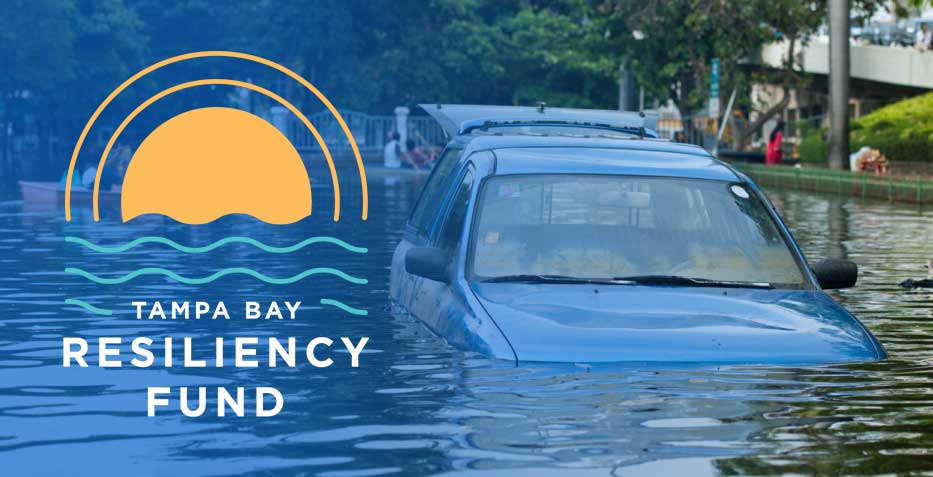
When Hurricane Helene made landfall last fall, the Tampa Bay Resiliency Fund activated immediately. Emergency grants moved within days to nonprofit organizations on the front lines — organizations providing food, shelter, case management, and critical services to residents who had nowhere else to turn.
One week later, Hurricane Milton struck. And the fund was still there.
What followed wasn’t just a disaster response. It was a demonstration of what a prepared, coordinated philanthropic network can do when it has already been funded and mobilized before the crisis begins.
What the Response Looked Like
In the months following the 2024 hurricane season, the Tampa Bay Resiliency Fund — a collaboration led by Pinellas Community Foundation, United Way Suncoast, Foundation for a Healthy St. Petersburg, and Allegany Franciscan Ministries — granted $998,332 to 34 nonprofit organizations across the region.
Those grants reached communities across Pinellas, Hillsborough, Sarasota, Manatee, and Desoto Counties, and the impact was direct and measurable:
2,200+ individuals received food assistance, including grocery gift cards and mobile delivery for residents with disabilities.
2,500+ disaster preparedness kits were distributed to families with young children.
Nonprofits received generators, facility repairs, and emergency staffing support to maintain services through extended power outages.
Hundreds of displaced residents were connected to case managers, rental assistance, and temporary shelter.
The fund operated in two phases. The first focused on immediate emergency relief in the weeks after the storms. The second invested in longer-term nonprofit infrastructure — generators, communication systems, facility repairs, and disaster preparedness planning — so that those organizations are stronger and more capable heading into the next season.
What Two Storms Taught Us
Two storms in one week changed the way we think about hurricane season. It is no longer about bracing for impact. It is about building the systems, networks, and resources that are already in place when impact comes.
The communities that recovered fastest were not the ones with the most luck. They were the ones where nonprofits had generators before the power went out, where case managers were already connected to families before crisis hit, and where funds were ready to move before the damage was fully assessed.
That is the model the Tampa Bay Resiliency Fund is built on. And it only works if the fund is sustained.
How You Can Help
Hurricane season runs June 1 through November 30. The time to give is before the storm forms — not after. A gift to the Tampa Bay Resiliency Fund today replenishes what was deployed in 2024 and ensures that when our community needs to respond, the resources are already in place.
Every dollar given now is a dollar ready to move the moment it is needed.
Give to the Tampa Bay Resiliency Fund
To read the full story of how the 2024 response came together — and who it reached — visit our impact report here:
Together After the Storm: Relief, Resilience, and an Urgency to Prepare
Pinellas Community Foundation is a 501(c)(3) nonprofit organization. Your gift may be tax-deductible; please consult your tax professional to explore your benefits.